As the 2014 Fifa World Cup draws closer, Stephen Keshi
may well find himself under increasing pressure to recall experienced
players such as Joseph Yobo, Peter Odemwingie and Taye Taiwo.
These three have over 200 caps between them and could each feasibly improve a different area of the squad.
Despite the accomplished performances of Kenneth Omeruo and Godfrey
Oboabona in the heart of the defence, the two youngsters lack the
high-end experience that may help them combat the likes of Lionel Messi,
Sergio Aguero and Edin Dzeko, all men they will likely need to repel at
the World Cup.
Kenneth Omeruo
Azubuike Egwuekwe has performed manfully when called upon by the
Super Eagles, but he stands almost alone as squad back-up and has even
less elite match experience than Omeruo and Oboabona.
Yobo, however, has enjoyed a successful career in the English Premier
League, with French giants Marseille and currently, at Turkish super
club Fenerbahce. He has experience of both the Champions League and is a
veteran of two World Cup squads and five AFCON sides. He remains both
Nigeria’s nominal captain and their record cap holder.
During the triumphant Cup of Nations run early last year, he played a
valuable role as a substitute, entering matches late on to support and
embolden the defence, guiding his inexperienced compatriots through some
testing final periods.
Could he not be useful this summer in a similar role?
Taye Taiwo
Similarly, Taye Taiwo. While few of us would advocate his inclusion
ahead of Elderson Echiejile, there wouldn’t be many who would take
regular reserve Francis Benjamin over the Bursaspor man.
Peter Odemwingie may have endured an uninspiring few months in Wales,
with Cardiff City, since arriving in the summer, but he remains a wily
operator. He has represented the Super Eagles at six major international
tournaments and has long cultivated a decent strike rate at club level.
He has the nous and the movement to fit into Stephen Keshi’s fluid
forward line and could certainly help the Super Eagles’ goal threat—a
key objective for the Big Boss over the coming months, following
Nigeria’s impotent displays at both the Confederations Cup and in CAF
World Cup Qualifying Group.
Despite being pooled with Malawi, Kenya and Namibia, the Super Eagles
only scored seven goals, less than all the other Brazil-bound African
sides.
Joseph Yobo
These men, and others of their ilk, pose a dilemma for Keshi. Does he
compromise the approach that has earned him such success and try to
reintegrate them into the fold, or does he stay true to his principles
and retain faith in the squad he has developed over the last two years?
There are certainly fair arguments for both responses, however, I
believe there is one crucial factor that Keshi must consider when making
this decision.
Tom Bates, the Performance Coach at West Bromwich Albion, advocates
the idea of ‘Culture Carriers’. He describes the concept with
FourFourTwo:
“These
players transfer the motivated mind-set of the manager to the team
during the match. Think Roy Keane, Patrick Vieira or John Terry. They
lead through performance and character. A culture carrier is about
constant improvement and maintaining high standards. Engage these
leaders to empower and motivate the team. They lead to keep the team
focused, driven and in control of the game.”
A successful manager will pull key men into this circle of ‘Cultural
Carriers’, they will be his eyes and ears on the pitch, the figures that
influence the dressing room and who dictate the team’s play and
organise those around them.
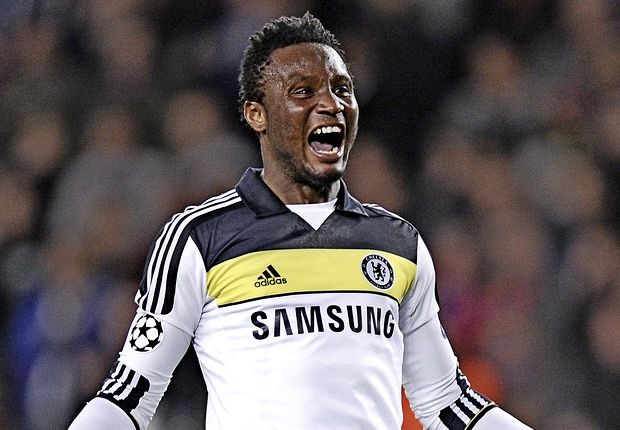
John Mikel Obi
In the Nigeria of 2013, John Mikel Obi and Vincent Enyeama fulfilled
this role for Keshi. Indeed, they are the natural choices for this
duty—Enyeama has played 88 times for his country, only seven behind
Yobo, and has been called-up by the Super Eagles for eight tournaments.
Mikel, on 55 caps, is joint-15th in Nigeria’s all-time list, but
crucially, he is by far the most decorated member of the Nigerian team,
this one, or almost any other.
Victor Obinna, on 47 caps, is the third most-experienced player of
those called-on by Keshi recently. He, however, has not been a regular
over 2013—he wasn’t present for either the AFCON or the Confederations
Cup and has only started two matches, both friendlies.
Crucially, as well, Obinna typically plays as a wide forward, not an
ideal position from which to organise others, improve moral and impart
the manager’s wisdom on those around him. Enyeama, as a goalkeeper, and
Mikel, as a defensive midfielder, are both ideally positioned to fulfil
their roles as Keshi’s ‘Cultural Carriers’.
Vincent Enyeama
Enyeama has proved himself adept at organising, monitoring and
encouraging those ahead of him, the young heads who so rarely look
ruffled; as a goalkeeper, he is perfectly placed to watch the action as
it unfolds and anticipate danger before it arrives.
Positioned in the heart of the midfield, Mikel is similarly poised to
influence the rest of the team around him and to maintain and underpin
the team effort.
Within the Nigerian context, he carries a natural authority. At 26,
he is slightly older than the squad’s other stars, while the honours he
has accrued and his experience working under the likes of Jose Mourinho,
Carlo Ancelotti and Guus Hiddink have given him a career that anyone
else in the national set-up would love to emulate.
Ogenyi Onazi
Ogenyi Onazi, the young defensive midfielder who operates alongside
Mikel, described the Chelsea man’s influence to me as such: “It’s easy
to learn how to soar when you’re playing alongside a Super Eagle.”
My fear is that should the likes of Yobo, Odemwingie and Taiwo be
recalled into the side, then the authority of Enyeama and Mikel and
thus, the dynamic of the squad, would suffer.
As things stand at the moment, the team enjoys the warm atmosphere
that Keshi has fostered, with an established and respected pyramid
structure.
Should the veterans return, displacing youngsters and domestic-based
players, then Keshi would need to reshape the structure of authority
that has worked so well over the last 18 months.
Is this a risk worth taking, or is this a dangerous temptation that may derail Naija’s World Cup ambitions?